
Roof Replacement Cost in Southwest Florida (2026), The 12 Factors That Move Your Price Up or Down
Sticker shock usually comes from one thing: expecting a roof to price like a single product. It doesn’t. In Lee, Collier, Charlotte, and Sarasota counties, roof replacement cost is more like building a weatherproof shell on top of your home, with Florida code, wind loads, and trade availability baked into the number.
As of February 2026, most Southwest Florida homeowners are seeing installed pricing that commonly lands in the low five figures for smaller shingle jobs, and pushes well into the $30,000 to $40,000 range for larger tile and premium systems. The spread isn’t random. It’s driven by a handful of predictable variables.
Below are current market ranges, clear assumptions, and the 12 pricing levers that can move your quote up or down.
2026 roof replacement cost ranges in Southwest Florida (what most homeowners see)
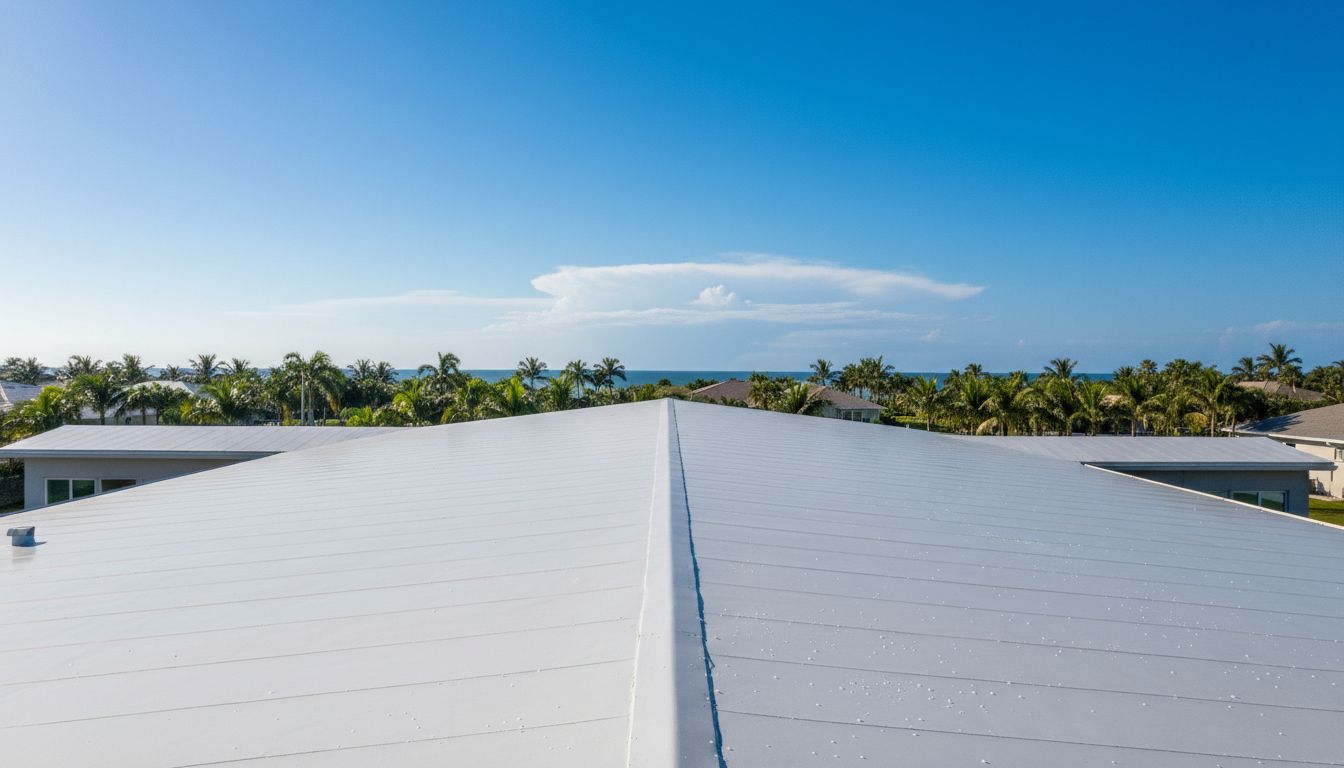
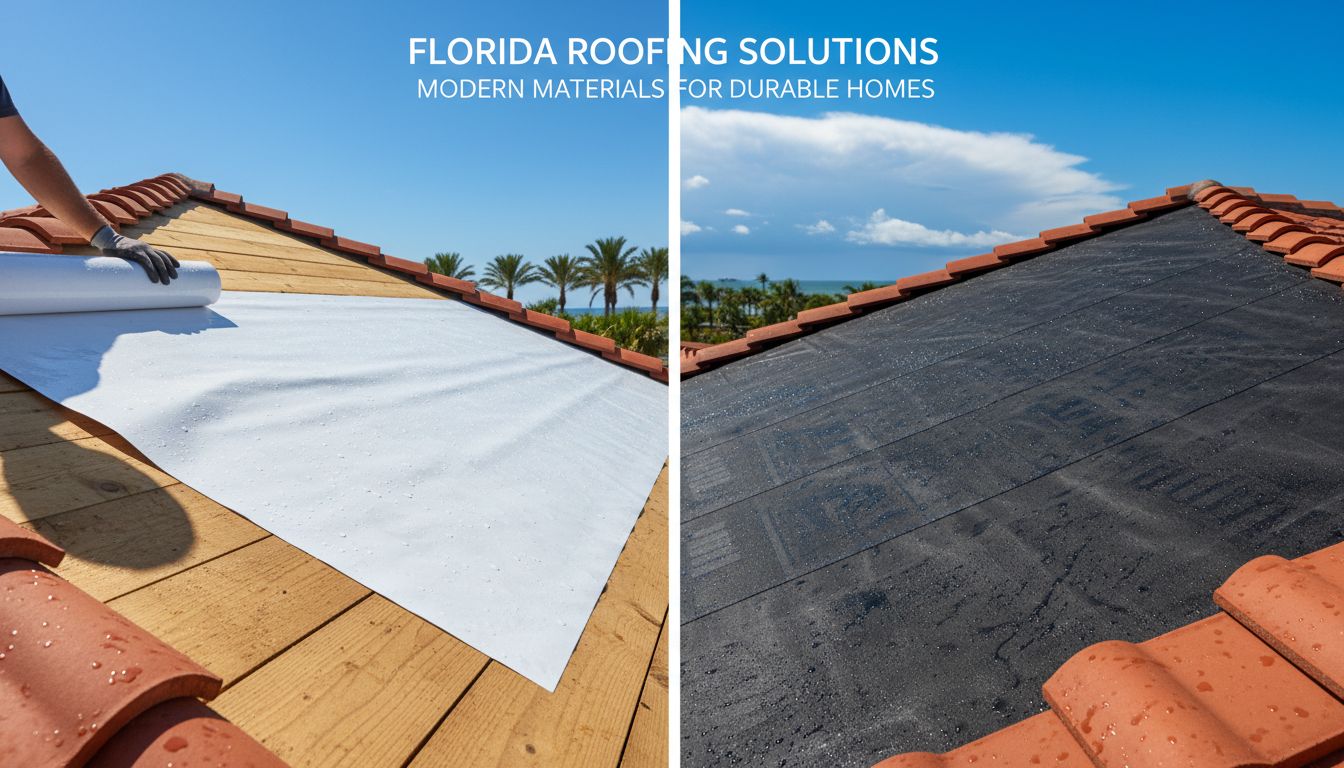
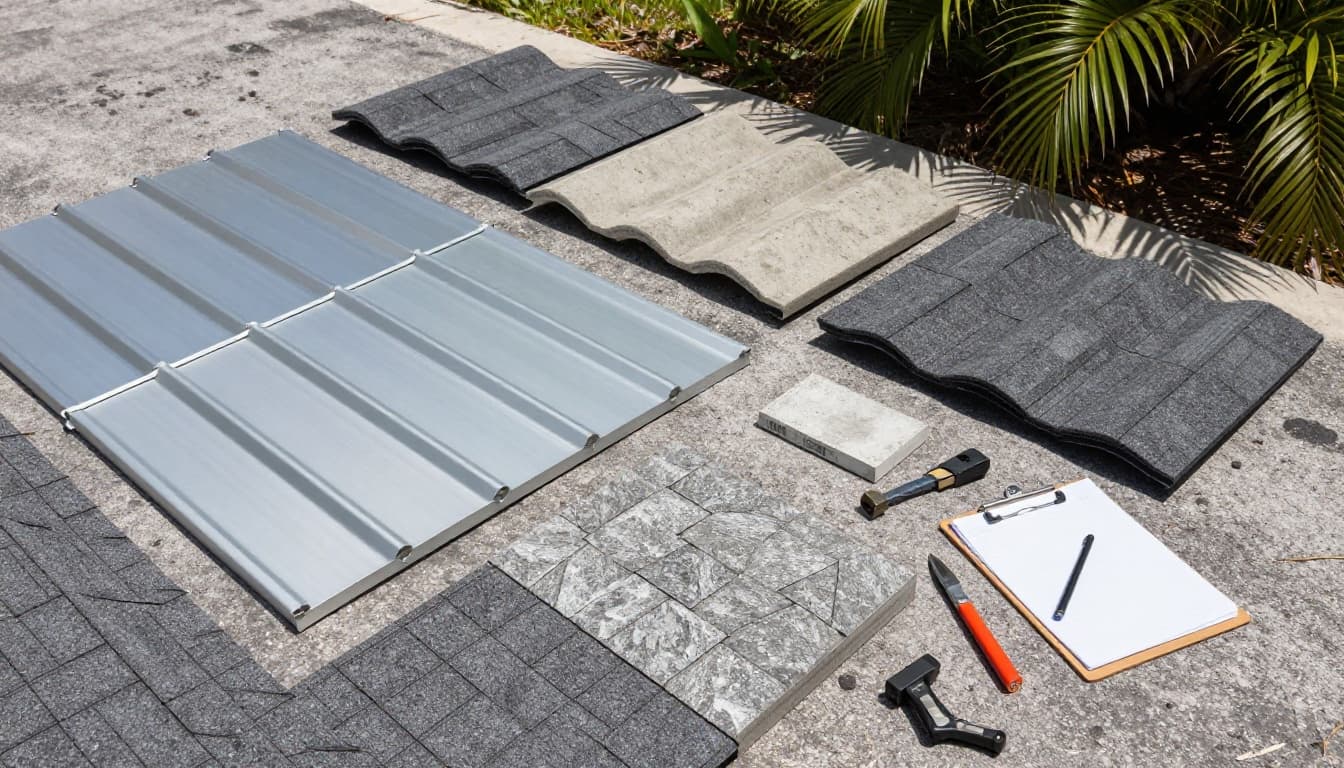 Common roof material choices side by side for a quick, real-world comparison, created with AI.
These ranges reflect typical installed pricing in Southwest Florida in 2026 for residential projects. They assume a standard tear-off (not an overlay), basic flashing replacement, and code-compliant underlayment. Steep roofs, complex layouts, or damaged decking can push totals higher.
| Roof system (installed) | Typical 2026 range (per sq ft) | Common total for 2,000 sq ft roof area |
|---|---|---|
| Shingle roof (architectural asphalt) | $6 to $11 | $12,000 to $22,000 |
| Metal roof (exposed fastener to standing seam) | $8 to $18 | $16,000 to $36,000 |
| Tile roof (concrete or clay) | $10 to $18 | $20,000 to $36,000 |
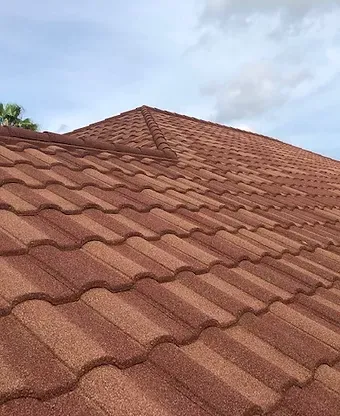
| Stone coated steel roof | $12 to $20 | $24,000 to $40,000 |
| Flat roof (TPO or modified bitumen, low-slope) | $6 to $8 | $12,000 to $16,000 |
Two quick caveats that matter in this region:
- Southwest Florida pricing often runs above national averages because crews build to strict wind and water rules, and demand spikes after major storms.
- A commercial roof is usually priced differently (often by larger square footage, mobilization, and system type). Some Florida pricing guides show a wider commercial range, often quoted per square foot, depending on the assembly and details. For a broader statewide snapshot, compare your quotes against Florida roof cost benchmarks.
A realistic example calculation (how one roof turns into a final number)
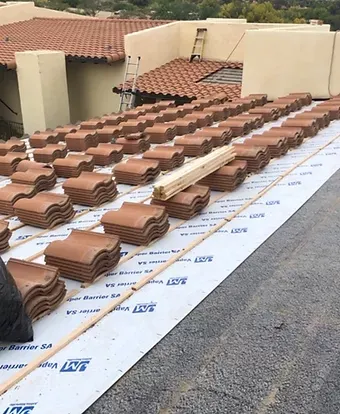
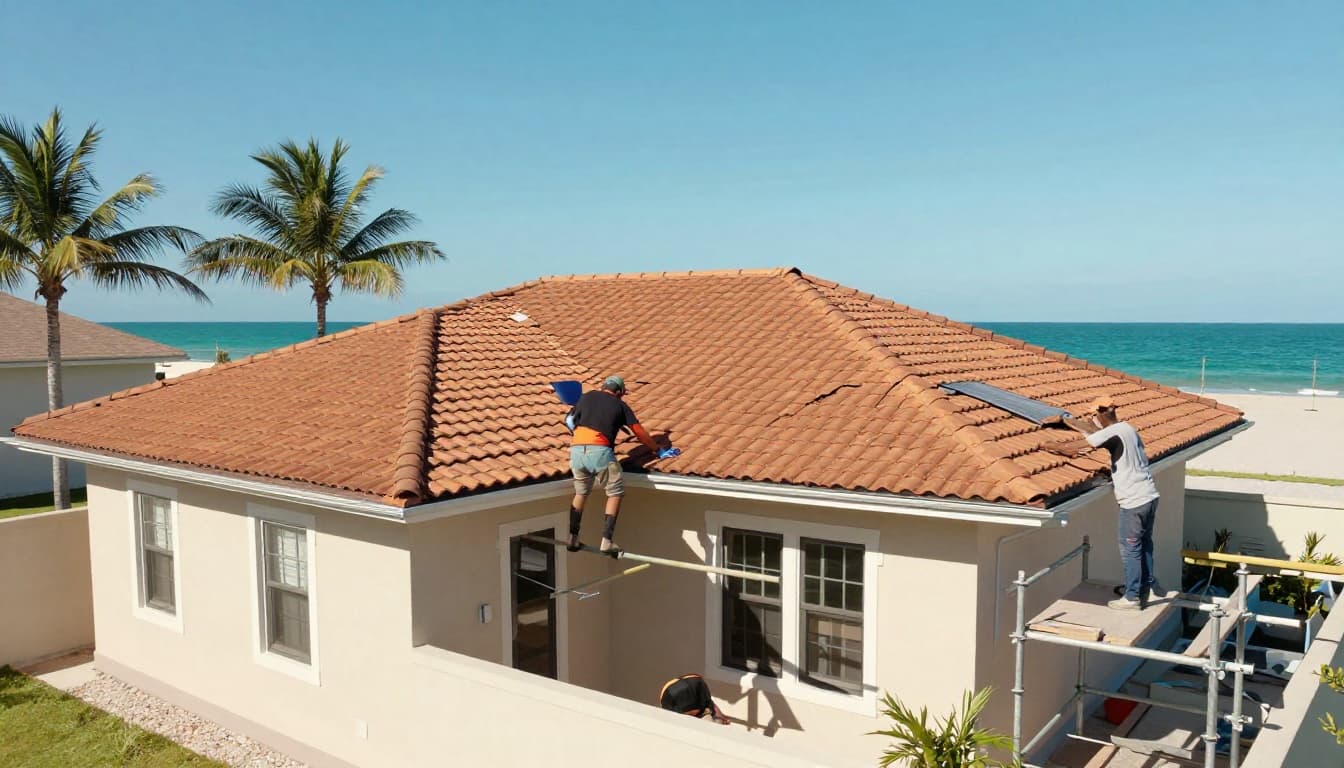 Tile installation on a Southwest Florida home where details like edges, fastening, and access can change labor time, created with AI.
Let’s use transparent assumptions so you can sanity-check a quote.
Example home: 2,000 sq ft of roof area (not living area), 5/12 pitch, average complexity (a few valleys), tear-off required, one existing layer. The homeowner chooses architectural shingles.
A simple way many roofers estimate is: roof area × installed price per sq ft, then adjust for repairs and upgrades.
| Line item | Example assumption | Estimated cost impact |
|---|---|---|
| Base shingle installation | 2,000 sq ft × $8.50 | $17,000 |
| Tear-off and disposal | included in base for many quotes, or itemized | $0 to $2,000 |
| Decking repairs | replace 8 sheets plywood | $600 to $1,200 |
| Upgraded underlayment | secondary water barrier style upgrade | $400 to $1,200 |
| Ventilation and flashing | replace pipe boots, drip edge, some vents | $400 to $1,500 |
| Permits and inspections | county or city dependent | $500 to $2,000 |
Example total: roughly $18,900 to $24,900 , depending on what the roof deck looks like once it’s opened and what’s included in the base number.
This is why a low quote can be risky. If it’s missing disposal, permits, or code-required components, the price often shows up later as change orders.
The 12 factors that move your roof price up or down in Southwest Florida
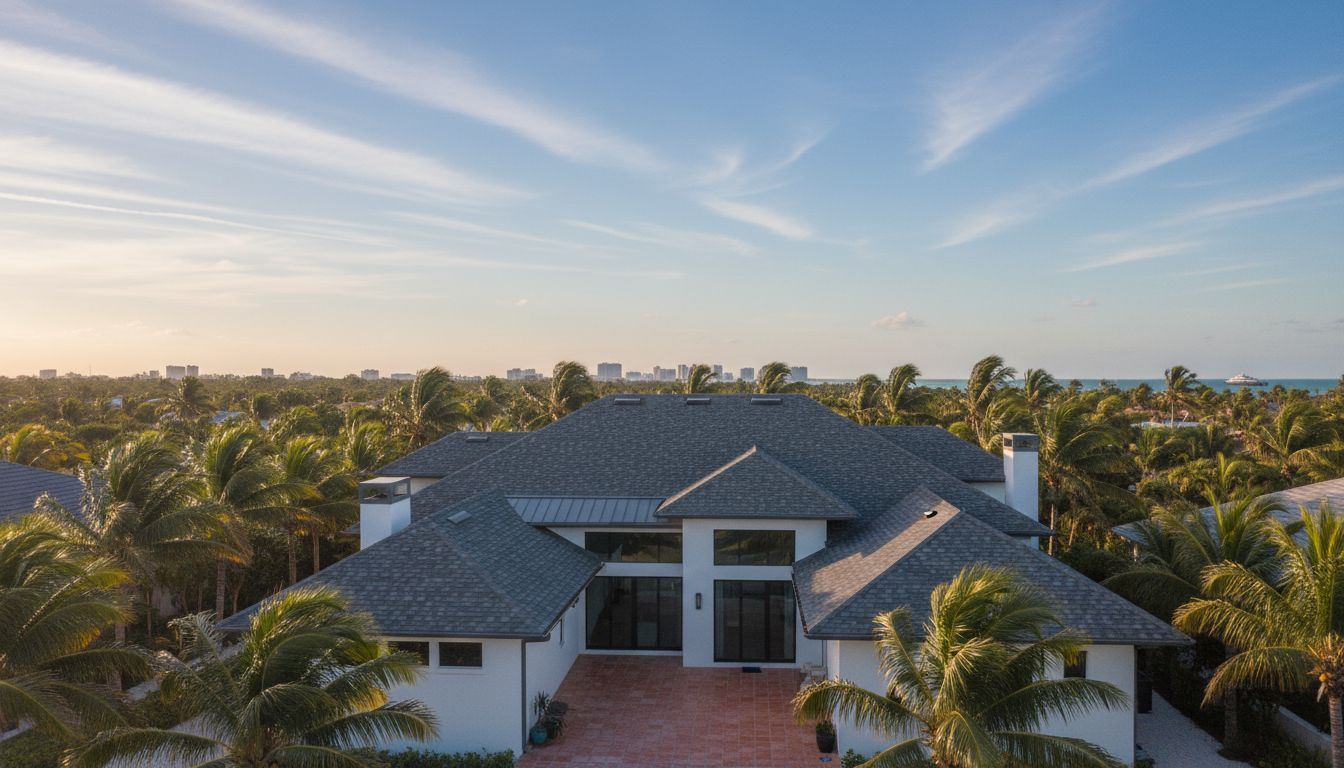
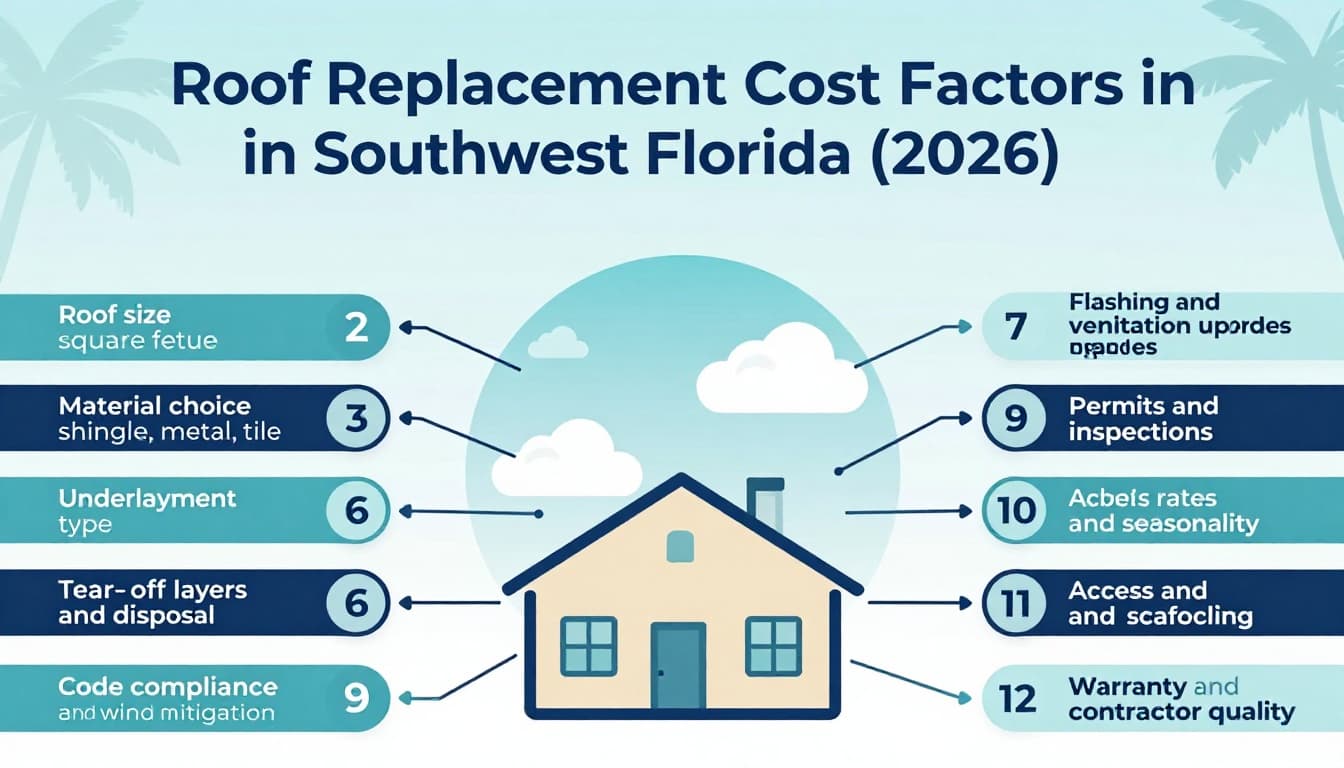 An at-a-glance map of the biggest pricing variables homeowners run into during replacement planning, created with AI.
If you want to predict your number before the estimates arrive, focus on these:
- Roof size (square footage): The biggest math driver. More area means more materials, labor hours, and disposal weight.
- Pitch and layout complexity: Steeper roofs and lots of valleys, hips, and dormers slow production and add safety costs.
- Material choice: A shingle roof is usually the entry price point. A metal roof , tile roof , or stone coated steel roof can cost more up front, but may change lifespan and storm performance.
- Underlayment type: In Florida, underlayment is not an afterthought. Higher-grade systems and secondary water barriers can add cost and protection.
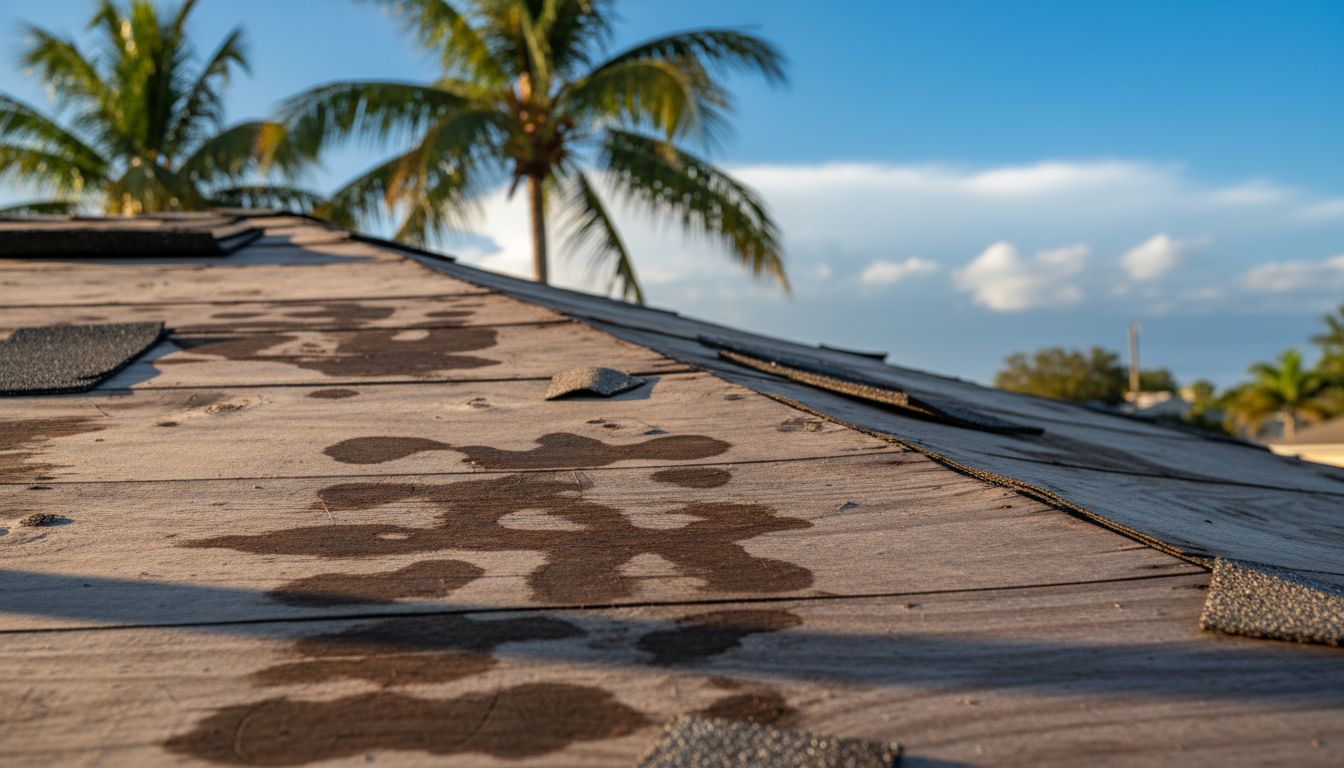
- Decking repairs (plywood/OSB): Once tear-off starts, rotten or delaminated decking has to be replaced so fasteners hold correctly.
- Tear-off layers and disposal: Removing two layers costs more than one. Dump fees and trucking also rise with heavy materials like tile.
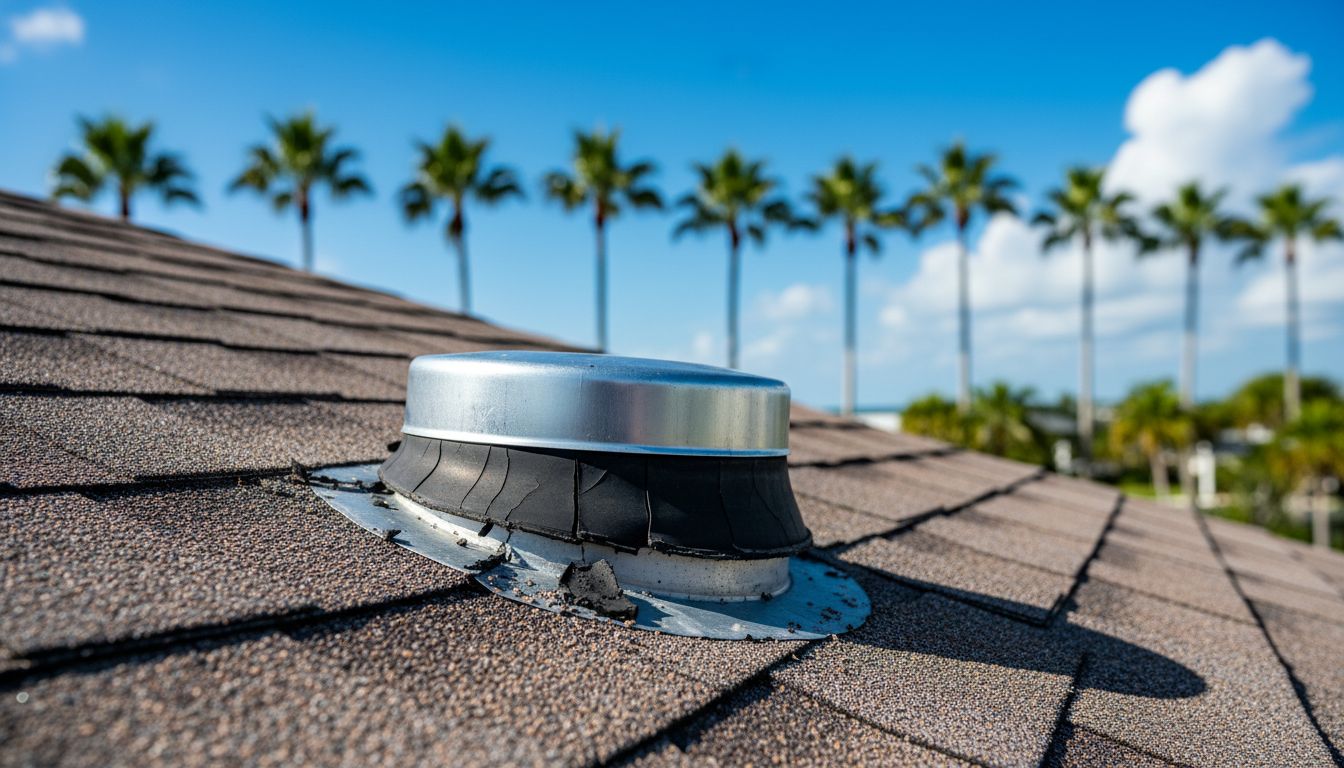
- Flashing and ventilation upgrades: Drip edge, wall flashing, pipe boots, and attic ventilation are common upgrade points, and common leak points if skipped.
- Code compliance and wind mitigation: Straps, clips, enhanced nailing patterns, and sealed decks can add upfront cost but help reduce storm risk and may support insurance discounts.
- Permits and inspections: Most replacements require permitting, and inspections can affect scheduling and labor planning.
- Labor rates and seasonality: Demand spikes after storms, and during busy seasons, the same roof can cost more.
- Access, scaffolding, and safety: Tight driveways, landscaping constraints, or multi-story homes add staging time and equipment.
- Warranty and contractor quality: Better warranties and stronger workmanship standards usually come from a more established roofing company with trained crews, and that tends to cost more than a “day-rate” operation.
For another Florida-focused breakdown of how these variables show up in bids, see this 2026 Florida roof pricing guide.
How to protect your budget (and your insurance file) before you sign
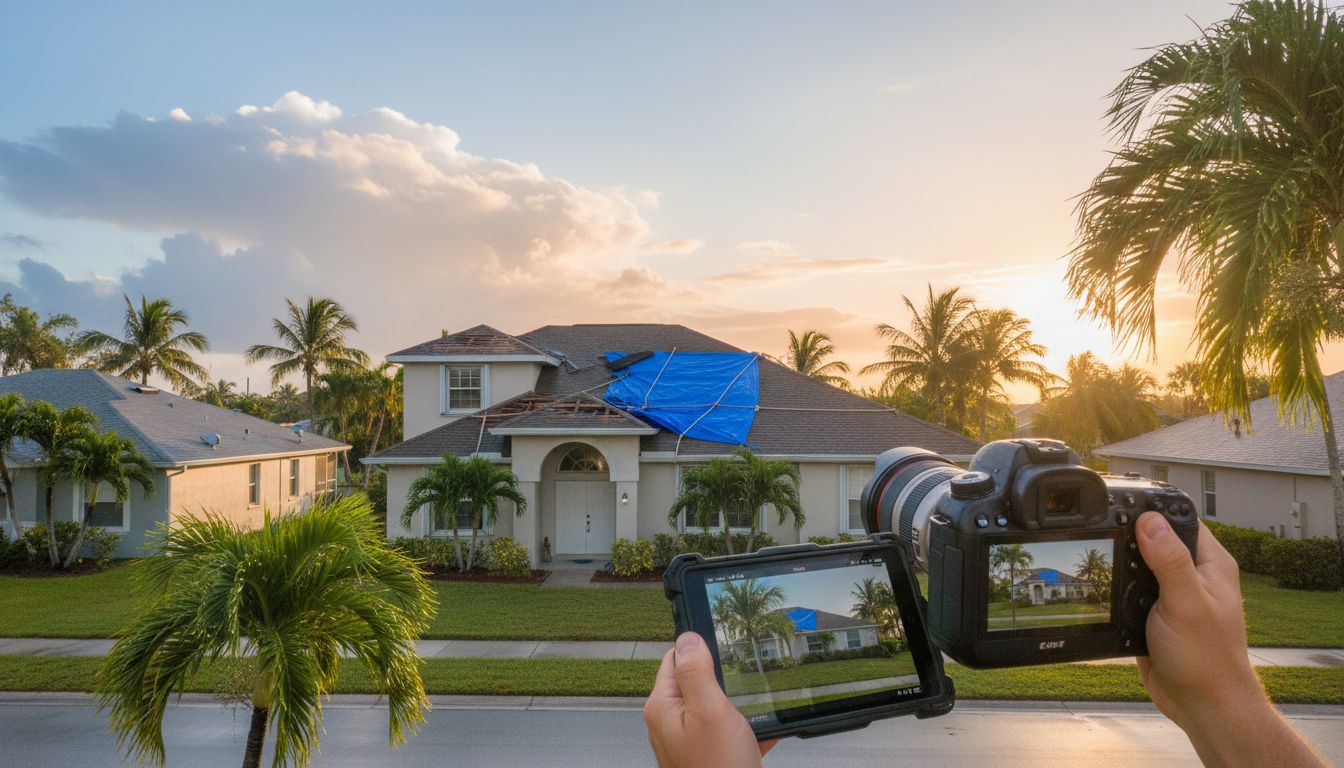
Start with a documented roof inspection . Photos, measurements, and notes about soft decking or active leaks keep everyone honest, including the homeowner. If a roofer can’t explain what’s included and what triggers a change order, treat that as a warning.
Ask each bidder to confirm, in writing, the big “gray areas”: decking replacement rate per sheet, exact underlayment type, how many layers are included in tear-off, and whether permits and disposal are included. Then compare apples to apples.
Finally, keep Florida realities in mind. Wind mitigation details and fastening patterns matter here more than in many states. They can raise the upfront cost, but they also reduce blow-off risk when the next storm tracks toward the Gulf.
Quick FAQ for Southwest Florida homeowners
How long does a roof replacement take?
Many homes take 1 to 3 days for installation, plus time for permits, material delivery, and inspections. Tile, metal, and complex roofs often take longer.
What’s the best season to replace a roof here?
Dry stretches help, but schedules fill up year-round. Booking before peak storm season can reduce delays and help you avoid emergency pricing.
Will insurance pay, or will my premium change?
Coverage depends on the claim cause and your policy. Even without a claim, wind mitigation improvements can affect premiums. A contractor should never promise insurance outcomes.
Conclusion
Roof replacement pricing in Southwest Florida isn’t a mystery, it’s a set of inputs. When you understand the roof system, the code requirements, and the jobsite details, the estimate becomes easier to read and harder to game.
Get at least three bids from licensed, insured contractors, and insist on a clear scope that matches Florida wind and water rules. A well-built roof isn’t just a line item, it’s storm protection you live under every day.